The CREATOR Act, which would mint an unprecedented IP right in artistic “style,” is not a serious bill, legally or politically, at least not yet. It is plainly unconstitutional and was introduced too late to go anywhere this Congress. It appears to be part of a years-long attempt by Adobe (who first proposed the bill in Congressional testimony in 2023) to use legislation as advertising, to signal to their users that even though they sell AI-powered software that makes it easier for amateurs to make pro-quality art, they stand with professional artists who fear AI-powered competition. But is a property right in style good for artists? The stories of Taylor Swift and John Fogerty (among so many others) suggest otherwise.
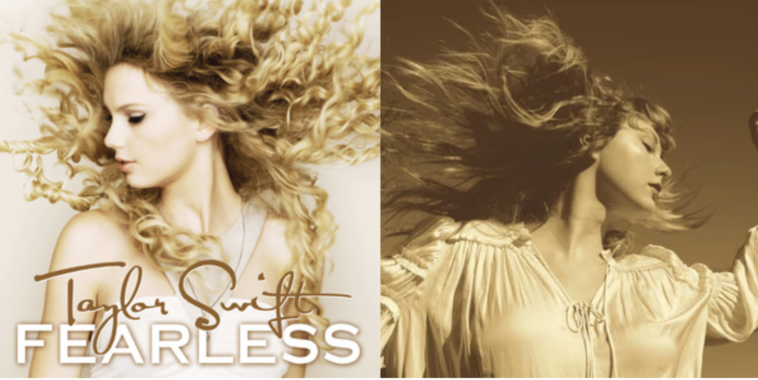
Like so much of Taylor Swift’s life, her battle with former label Big Machine and her nemesis Scooter Braun over her early records was widely reported. I’ve previously explained what it teaches about copyright, but here’s the short version: like almost every young artist, Taylor did not “own her masters,” i.e., the copyrights in the master recordings of her songs, so she couldn’t prevent Big Machine (despite years of pleading) from selling those rights (and, in her words, her legacy) to Braun. No quitter, Taylor took advantage of a limitation in copyright—the fact that a sound recording copyright covers only that specific recording—to re-record and re-release “Taylor’s Versions” of those first six records. If the sound recording right weren’t limited in that way, and if Taylor had not retained the rights to her compositions, she would have been helpless. Taylor’s story is a reminder that bigger, longer, stronger copyrights can limit artists’ freedom and even enable traumatic alienation from their own work.
Years earlier, when Taylor was still a toddler, John Fogerty took his greedy former record label all the way to the Supreme Court to defend his creative freedom. Fogerty was the songwriting force behind Credence Clearwater Revival, and you can hear his distinctive style in their early-1970s hits like “Bad Moon Rising,” “Fortunate Son,” and (one of my favorites) “Run Through the Jungle.”
Unlike Taylor, Fogerty sold off not only his “masters” but also his “publishing” (the copyrights in the songs themselves, which applies to any recording or adaptation of the song). Those rights wound up in the hands of Fantasy Records. In 1985 Fogerty released a song on his debut solo album Centerfield called “The Old Man Down the Road.”
It was Fogerty’s only Top 10 charting song as a solo artist (though the album’s title track is an eternal classic). Seeing dollar signs, Fantasy sued Fogerty alleging that “Old Man…” infringed their copyright in “Run Through the Jungle.”
If you listen to the two songs side-by-side, you can hear why Fogerty won. Sure, both songs are in that “swamp rock” boogie style that Fogerty helped to popularize (building, of course, on previous artists who sang minimalist, gritty, bluesy songs about rivers and bayous). But their melodies, lyrics, and harmony are easily different enough to avoid the “substantial similarity” required for copyright infringement. Like Taylor, Fogerty may have signed away some of his rights, but he could continue to write and record new songs thanks to the limits of those rights.
Fantasy’s money grab was so brazen that Fogerty asked the court to make the label pay his attorneys’ fees, a remedy available to the “prevailing party” in a copyright suit. Fantasy argued that only a copyright holder plaintiff could be a “prevailing party,” and the issue went all the way to the Supreme Court. In another big win for artists, the Court sided with Fogerty, recognizing that “a successful defense of a copyright infringement action may further the policies of the Copyright Act every bit as much as a successful prosecution of an infringement claim by the holder of a copyright.” In this case, Fogerty’s successful defense made clear that he was free to write new songs like “Old Man,” which enriched the public with more art and encouraged other artists to continue working in their own style without fear of reprisal from old labels.
What if young Fogerty, or young Taylor, had been able to sell off rights not just to specific recordings, or even specific songs, but to their general style? Obviously Fogerty would’ve lost his case, and not only would Taylor have been blocked from recording her “Versions,” but she would have needed Scooter Braun’s permission even to write entirely new songs and records that sound like herself. Fogerty, Swift, and all other artists would also be vulnerable to lawsuits claiming they were impermissibly copying other artists’ styles. It would be a disaster for artists.
The CREATOR Act is being sold as a creator’s right. But the “federal intellectual property right” that it creates in “distinctive style” can be licensed or assigned, meaning that artists can sell it or give others exclusive control over use of their “distinctive style”—control that excludes even the artist herself. Artists are understandably anxious about AI technology, but they should remember stories like Taylor’s and Fogerty’s (and Prince’s, and De La Soul’s, and a hundred other artists who’ve found themselves the victims of corporate copyright owners), and think twice before creating or expanding rights that are just as likely to limit their own creativity as to protect it.